

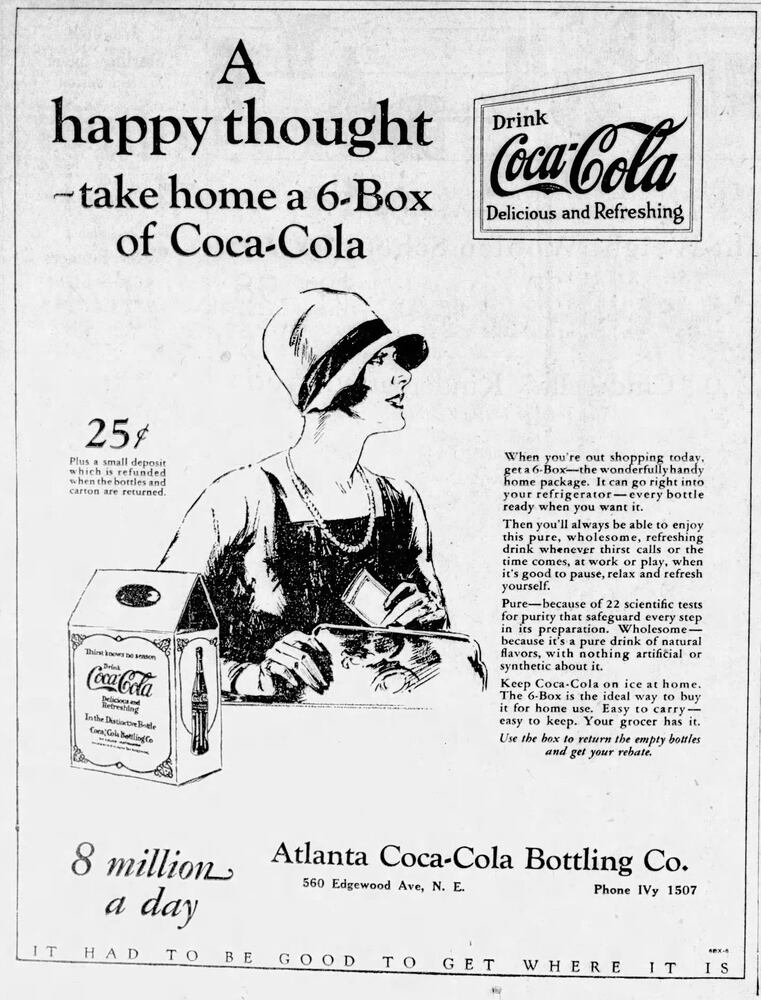
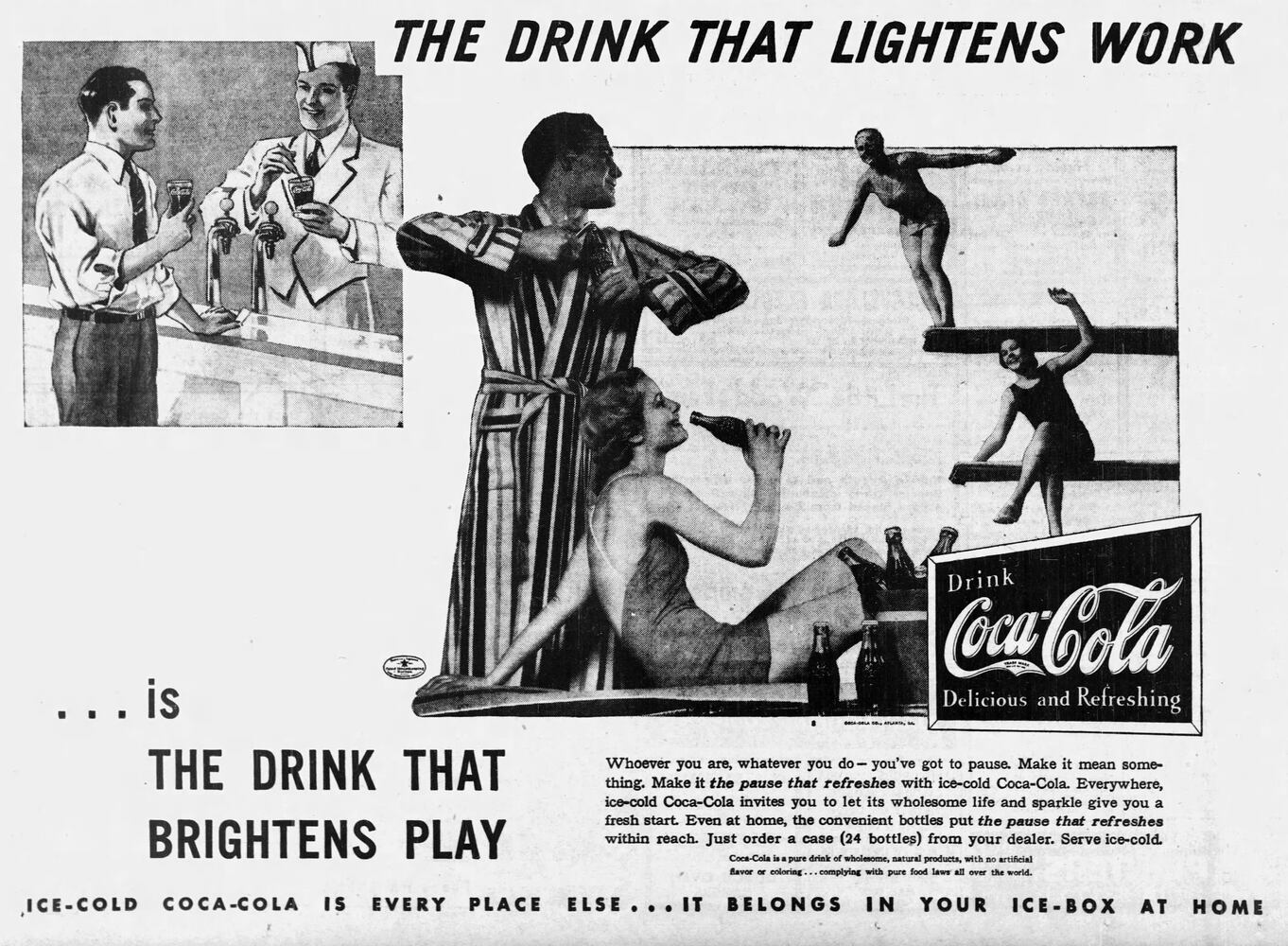
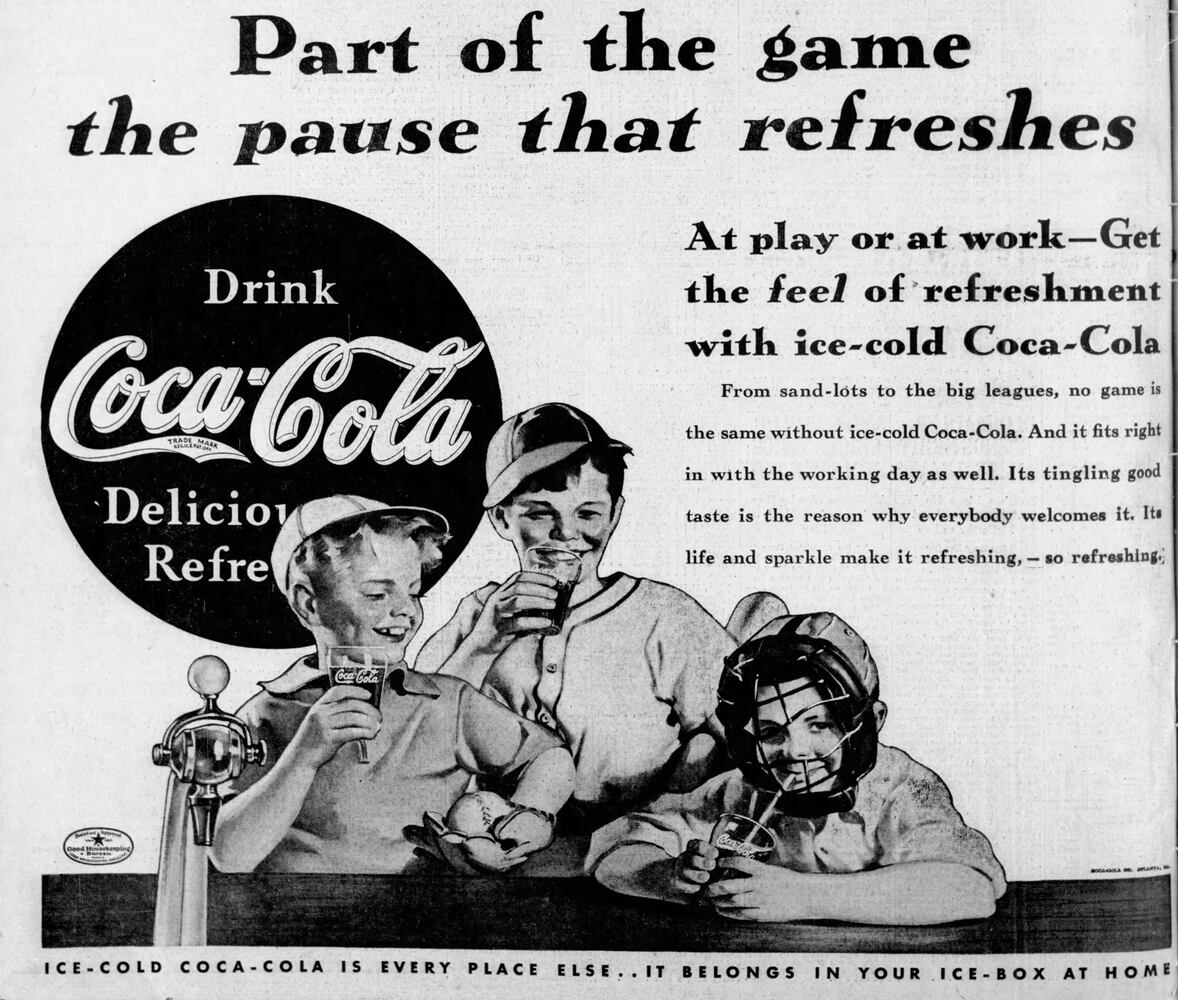
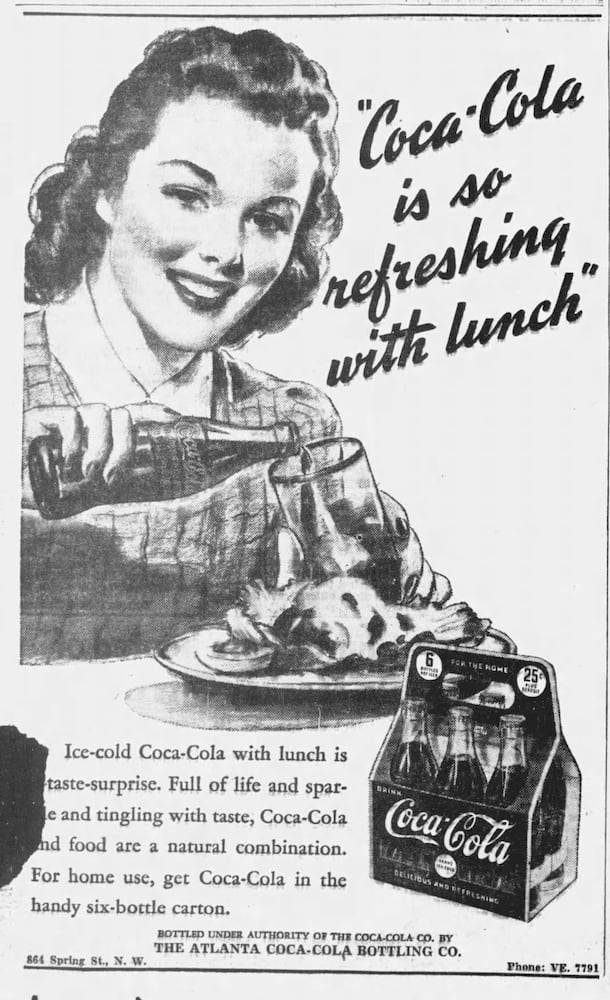
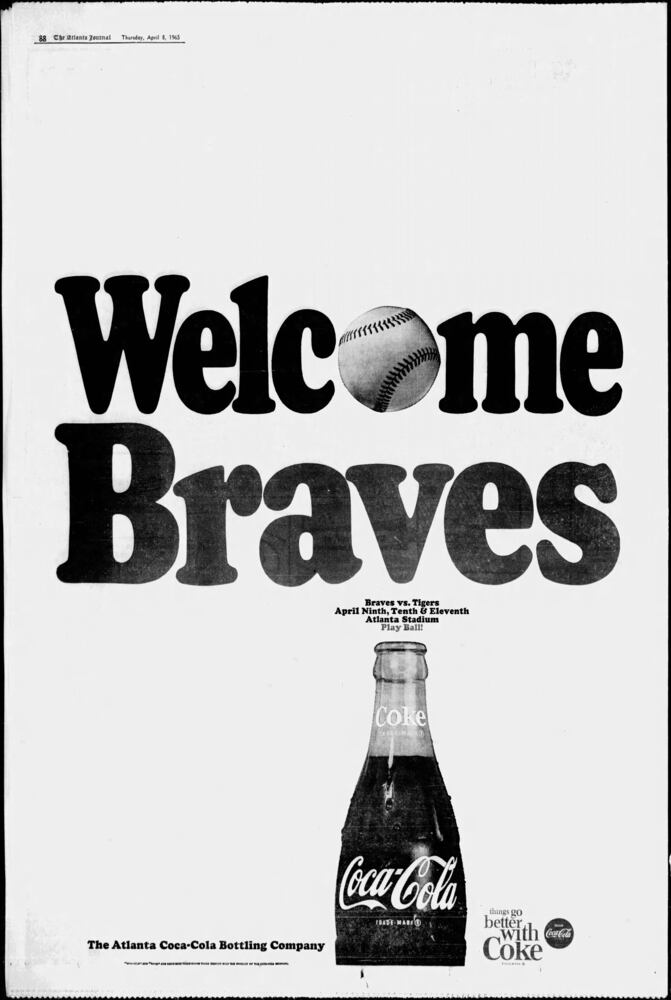
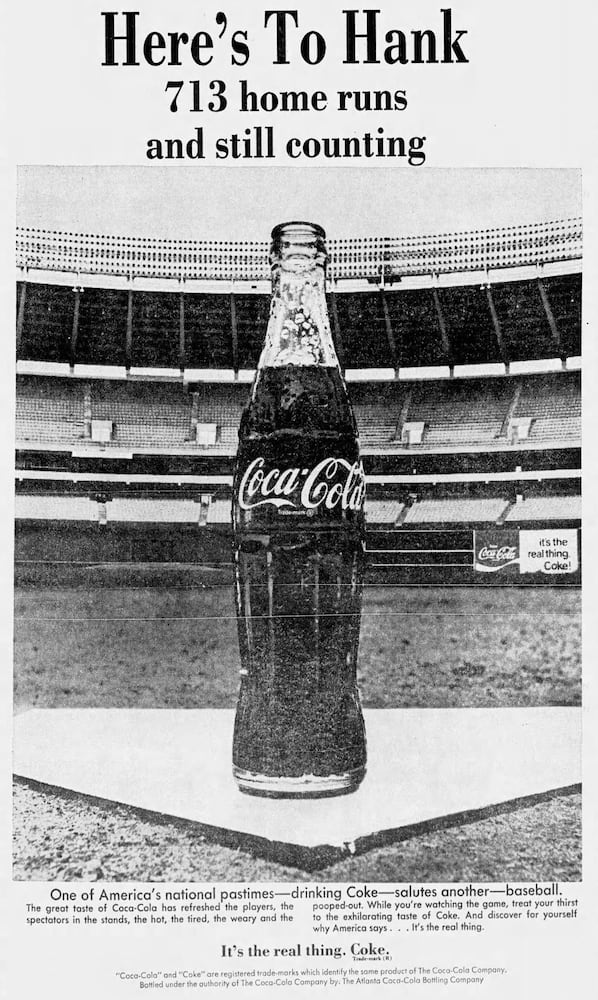
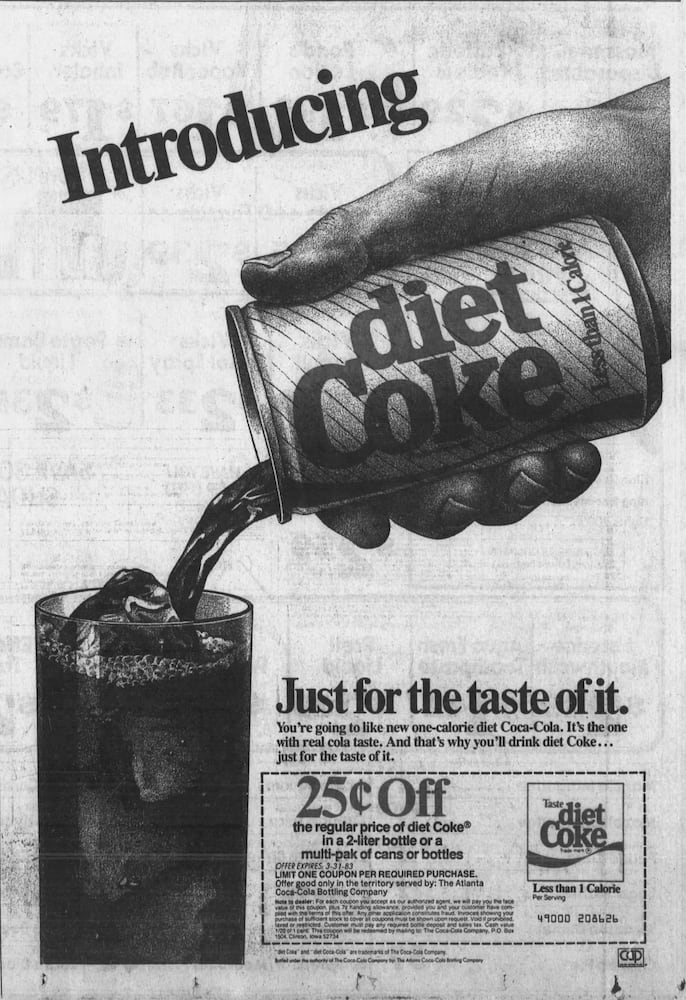
Hometown Coca-Cola has long been a marketing behemoth, from Super Bowl spots to its iconic holiday ads featuring Santa Claus and precocious polar bears.
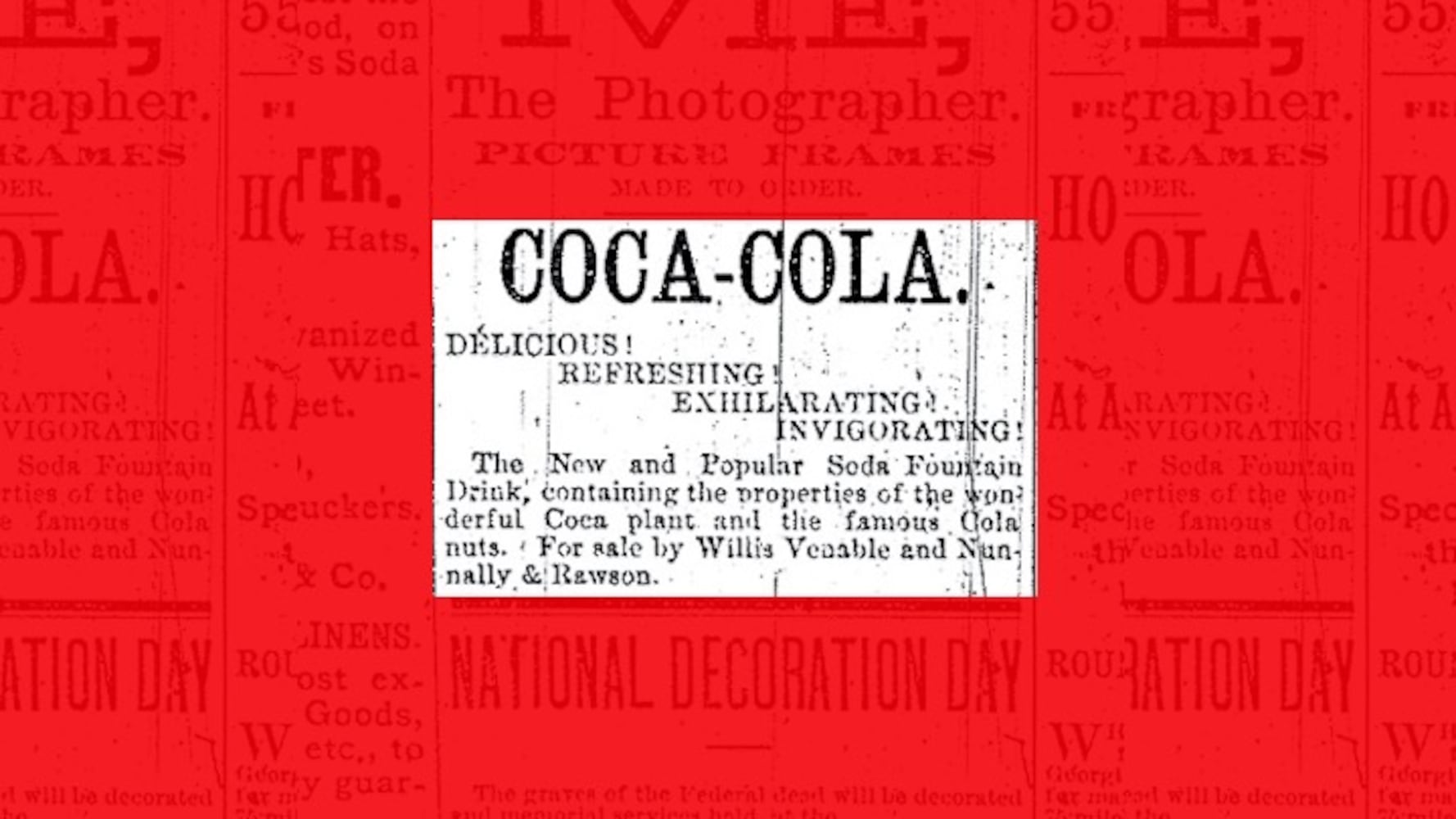
But Coca-Cola’s first advertisement was far more modest, about the size of a pair of postage stamps on an inside page of The Atlanta Journal on a Saturday afternoon in 1886.
The novel product was pushed as “Delicious! Refreshing! Exhilarating! Invigorating!”
From these humble beginnings, Coca-Cola would go on to be sold in more than 200 countries, becoming one of the most advertised brands in the world.
Coca-Cola today spends about $5 billion on advertising a year, according to its 2024 annual report.
“For decades, the Journal and the Constitution documented our company — and Atlanta — as both grew together,” Sarah Rice, Coca-Cola’s senior director of archives, said in a statement.

Credit: Seeger Gray / AJC
Credit: Seeger Gray / AJC
For more than a century, the beverage giant has pushed the boundaries of marketing — creating iconic ad campaigns and even shaping the modern image of Santa Claus.
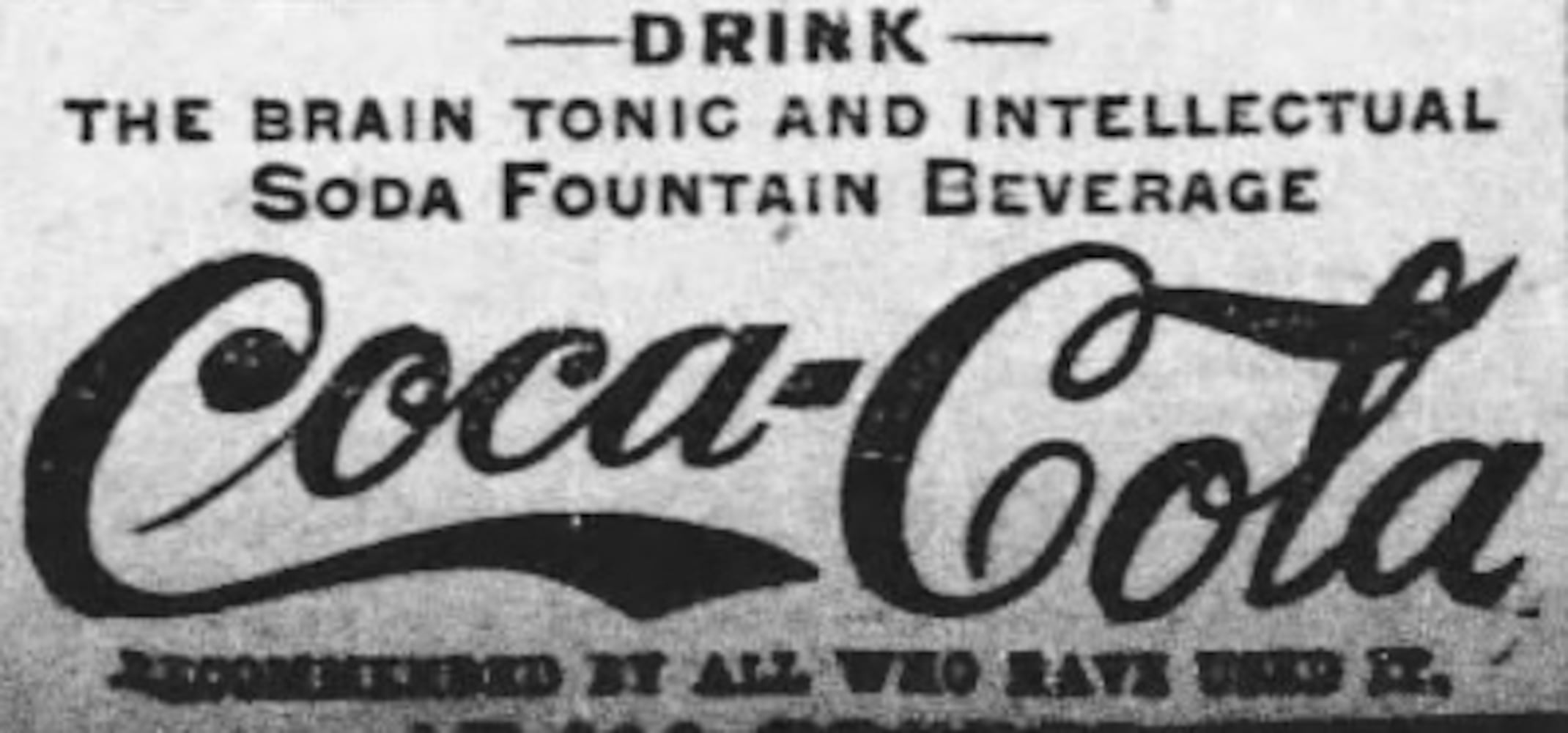
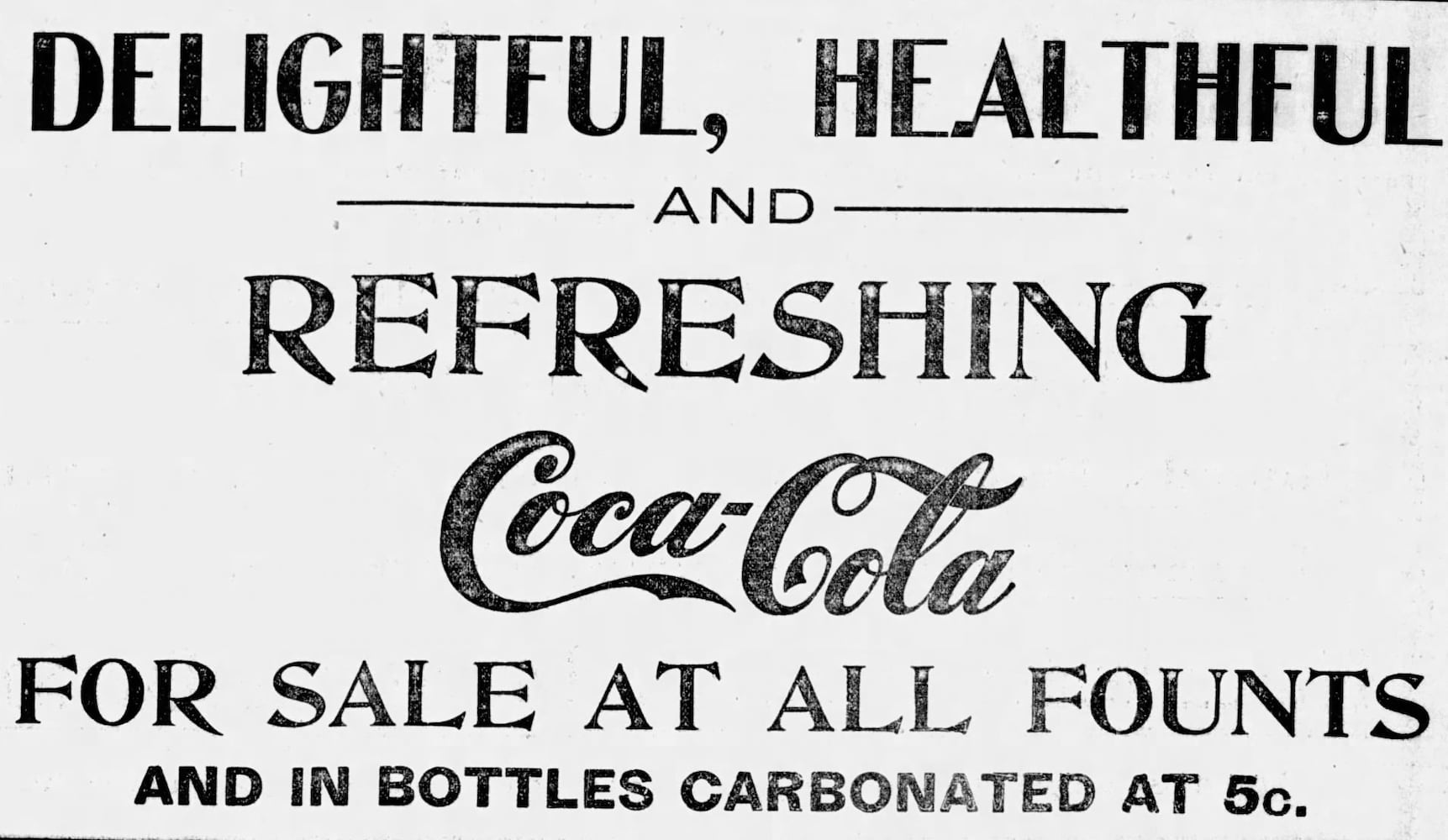
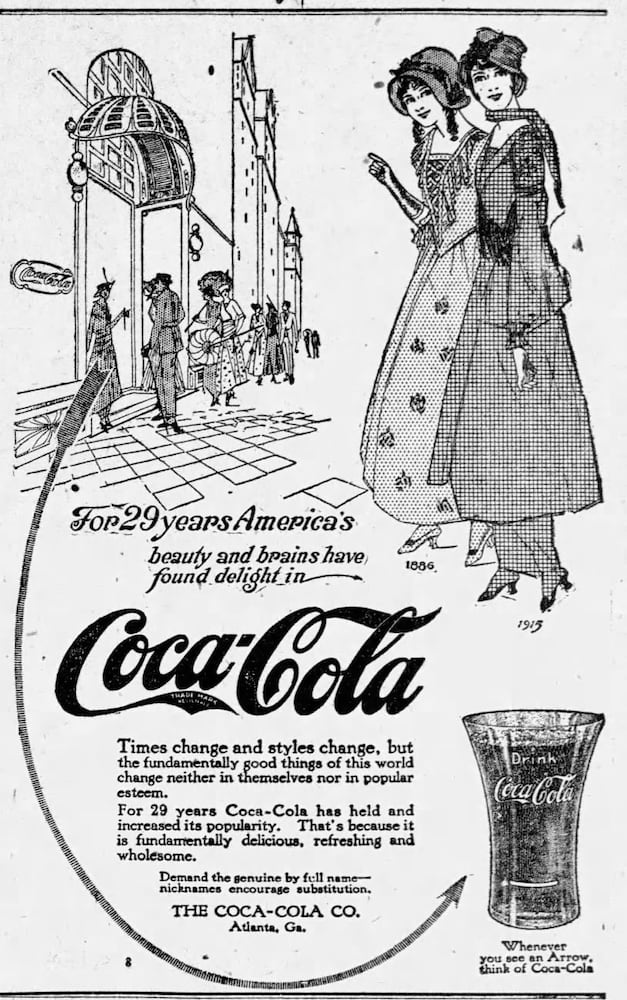
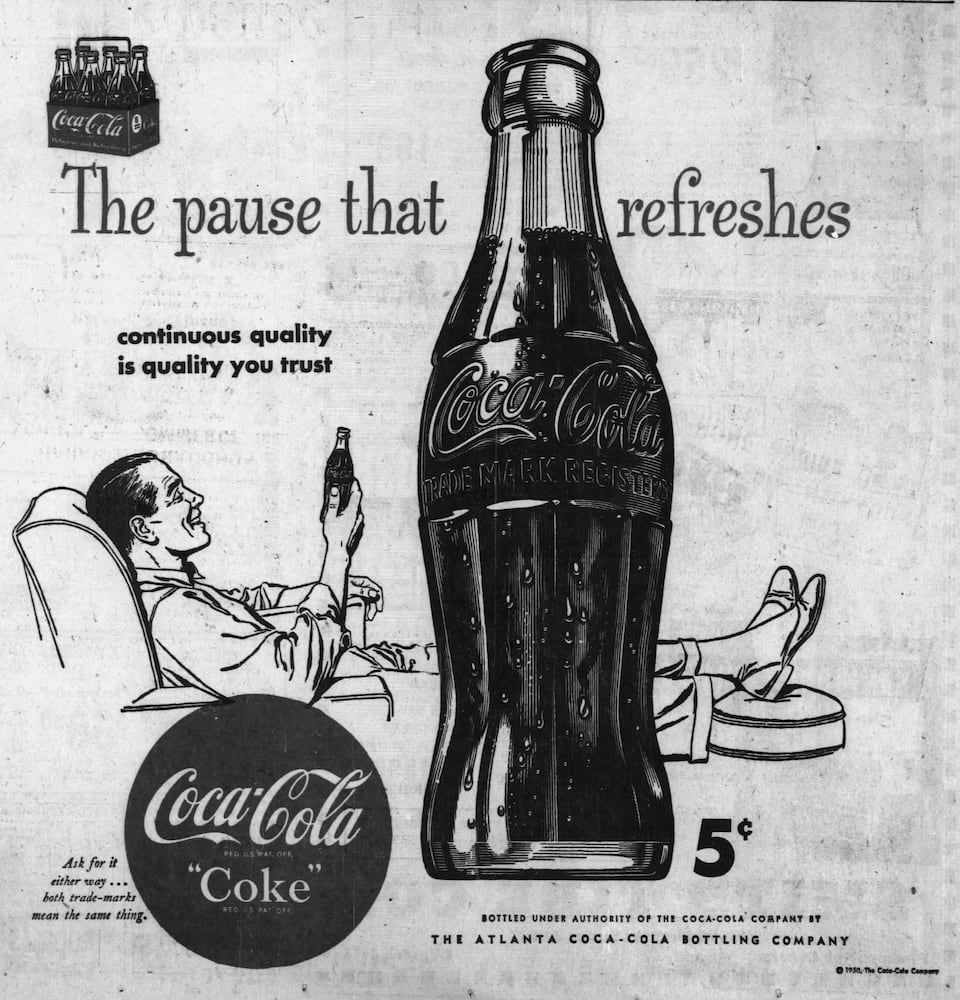
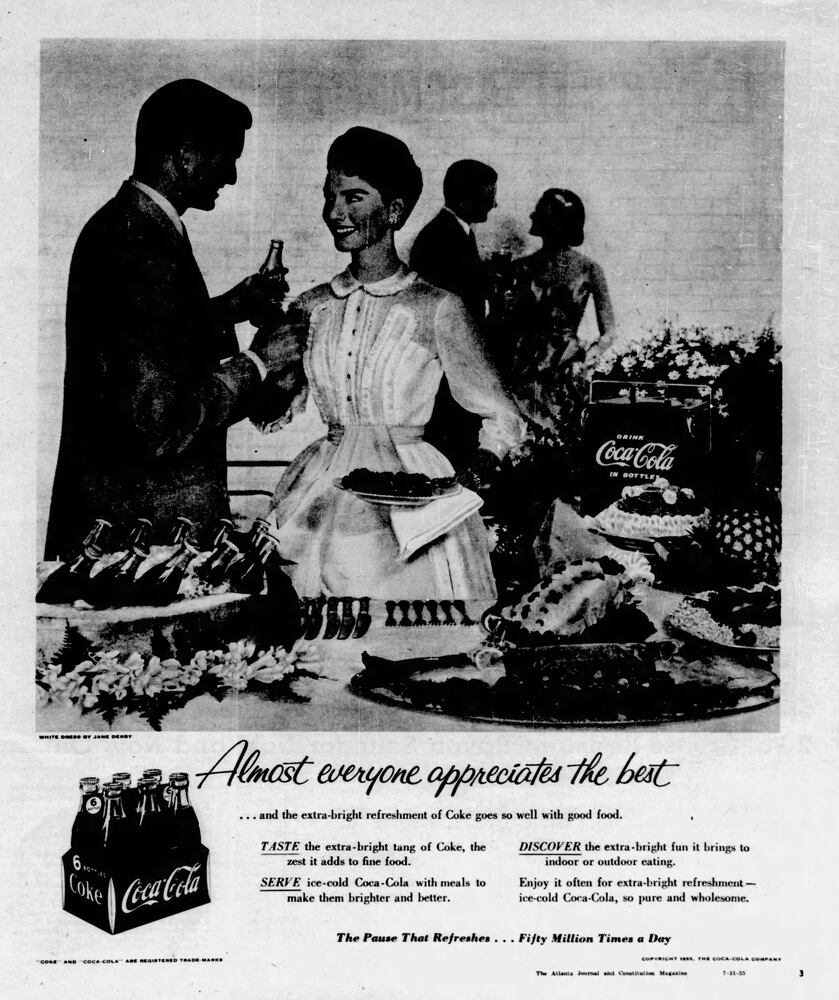
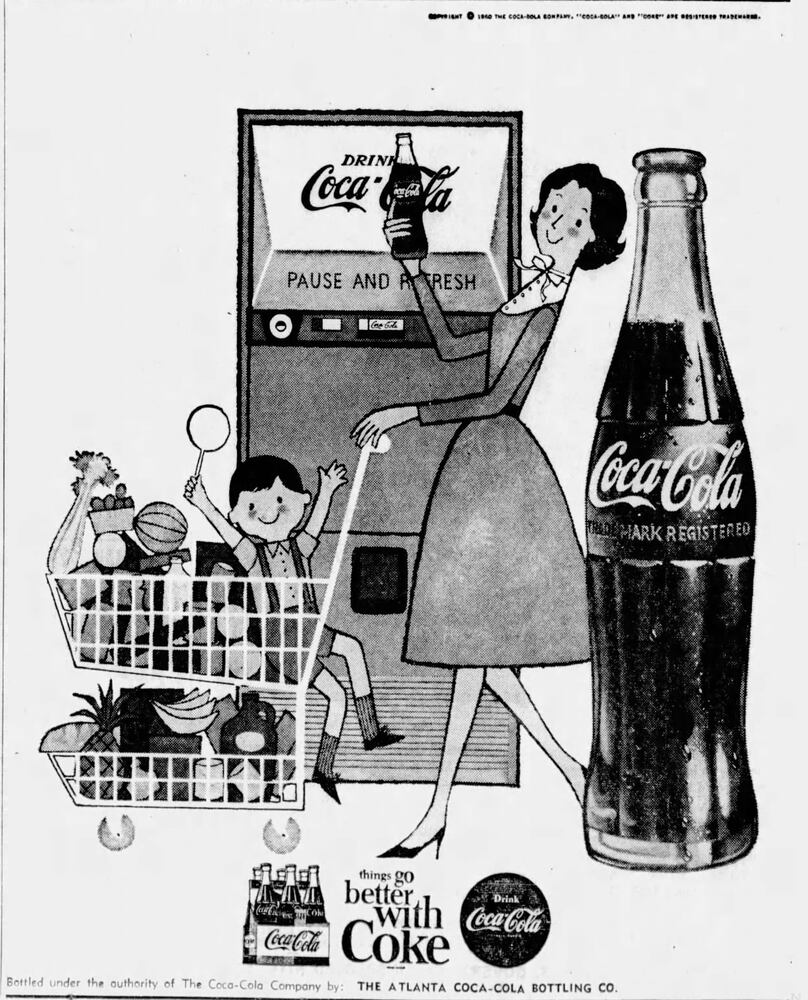
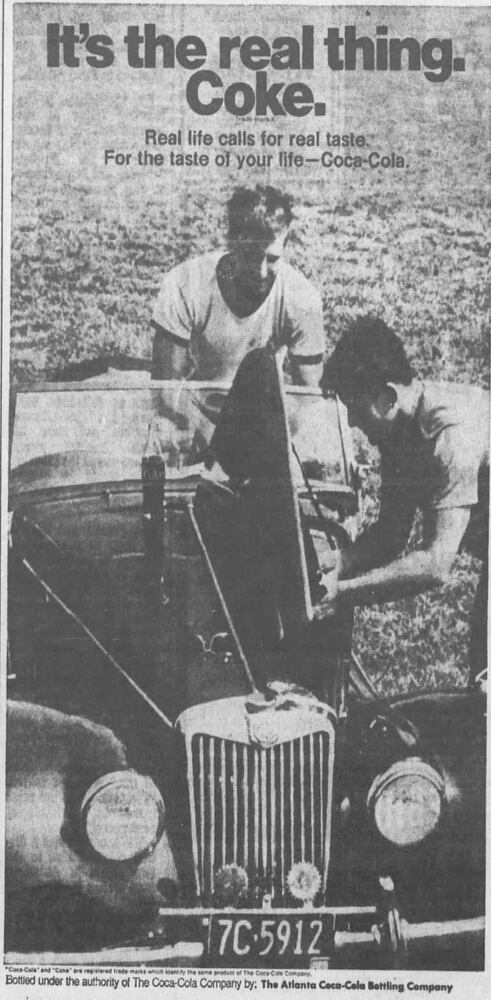
Although Coca-Cola’s slogans have changed, from “The Pause That Refreshes” to “It’s the Real Thing,” its core message has stayed the same. Coca-Cola is pitched as an affordable product that can bring people together for a moment of happiness.
The company’s imagery has carried through generations, from its Spencerian logo script to its vibrant Cola-Cola red to its curvy bottles.
“It’s a very simple product, and it doesn’t do much more than promise you a moment of refreshment, but it also has the ability to transport you outside of yourself for at least a few minutes,” said Phil Mooney, the former Coca-Cola archivist and historian for 36 years.

Credit: sou
Credit: sou
The story began at a downtown Atlanta soda fountain, the social hub of the 19th century.
At Jacobs’ Pharmacy, where the first glass was poured in 1886, Coca-Cola joined a crowded marketplace. The cola had to win customers amid a plethora of mostly fruity, carbonated drinks.
Asa Candler, who acquired the recipe in 1888, would have people “standing on the street corners of Atlanta handing out sampling coupons,” Mooney said. Coca-Cola was one of the first companies to ever use the promotions.
“Asa Candler was an advertising genius,” Mooney said. Coca-Cola gave away branded items such as serving trays, clocks and calendars to boost the soft drink. “(Candler) really understood there were multiple ways to reach audiences, and he used every single one of them.”
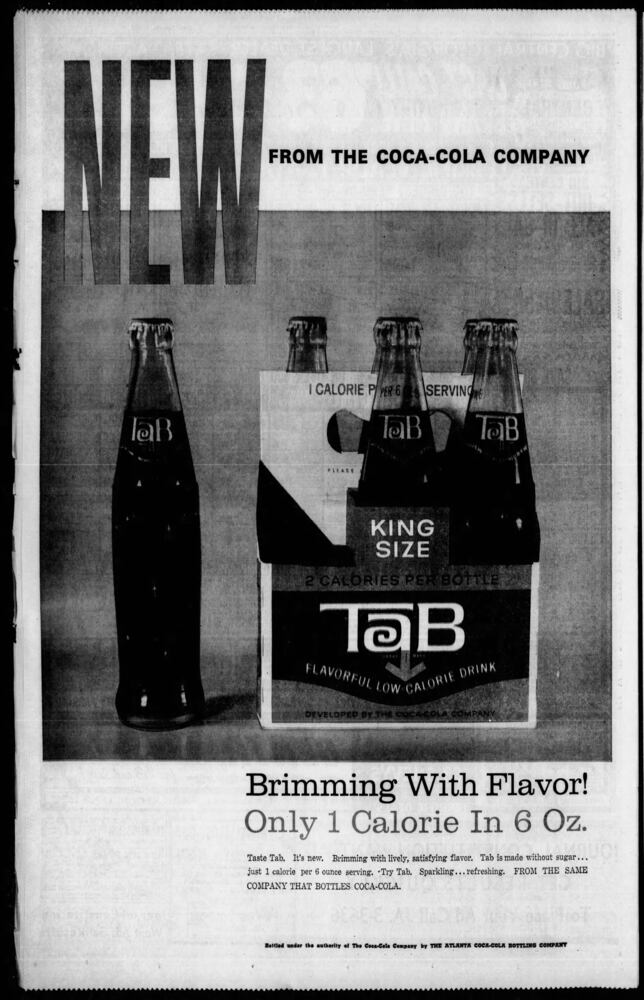
Innovative marketing would fuel the company’s success for decades and reshape popular culture.
In 1931, Coca-Cola commissioned illustrator Haddon Sundblom to develop advertising for the holidays, an important selling season.
Sundblom painted Santa Claus as jovial, rotund and dressed in red and white, with a Norman Rockwell quality. Old Saint Nick, of course, was drinking a Coca-Cola, thirsty from slinging toys around the world.
Sundblom produced ads for more than 30 years, defining the look and character of Santa, experts said.

Credit: Courtesy of Coca-Cola
Credit: Courtesy of Coca-Cola
Coca-Cola’s most iconic ad came in 1971, when the company gathered diverse youth atop a hill in Italy to sing a catchy tune, “I’d Like to Buy the World a Coke.”
The “Hilltop” commercial was one of the most expensive television ads of the time, but its message of unity struck a chord during a time of global conflict.
“It is still the most remembered commercial that Coke ever did,” Mooney said. “It was a tumultuous time. … And this is just a simple message to say: ‘Hey, we’re not all that different. We all can get together and enjoy simple things like having a Coke together.’”

Credit: sou
Credit: sou
Coca-Cola also poured big money into sporting events. During the 1996 Centennial Olympic Games in Atlanta, Coca-Cola reportedly spent $250 million on advertising, more than any other corporate sponsor at the time.
Coca-Cola covered nine MARTA stations in beverage signs and affixed lights to shine a Coca-Cola Olympic logo on station floors. Banners, billboards and buses with Coca-Cola ads decorated the city.

Credit: Roger Ressmeyer
Credit: Roger Ressmeyer
Coca-Cola didn’t always hit the right note though.
“They really live and die on whether they’re actually staying on the leading edge,” said Duane Stanford, editor and publisher of trade publication Beverage Digest.
“They’re going to take some risks,” he said.
One of the most famous marketing blunders was the launch of New Coke in April 1985, when the company changed the classic soda formula.
Coca-Cola was swamped with complaints, and after 79 days reversed its decision, bringing back the original formula as Coca-Cola Classic.
“In every marketing class, it’s the classic example of how a smart company can screw up and recover,” Ken Bernhardt, a Georgia State University marketing professor, said in a 1995 article.
Just as The Atlanta Journal-Constitution is ending its print edition and shifting to digital, so has Coca-Cola adjusted its media strategy.
The company’s digital mix grew from less than 30% in 2019 to 65% of its total media spend in 2024, the company said.
For example, Coca-Cola is using artificial intelligence to generate holidays ad, which outgoing CEO James Quincey has said is quicker, cheaper and more customizable.
“Just like the newspaper has to change, so, too, do the advertising messages that companies like Coke need to use,” Mooney said.
“I don’t think the essential messaging has changed, but certainly the ways in which we deliver those messages has changed unbelievably,” he added.
About the Author


Keep Reading

The Latest

Featured
