I passed the bar in 1965, becoming a lawyer. President Lyndon Johnson made a speech announcing what I hoped would finally cleanse this nation of its greatest sin. Passage of the Voting Rights Act of 1965 would enable the U.S. to end voting discrimination against Black people in the South, which had continued after the Reconstruction period following the Civil War.
I will always remember Johnson’s statement in that speech to the effect that this law would relieve, for himself and others, the burden of bigotry Southern white citizens had carried since the days of slavery. He added, “and we shall overcome,” the familiar cry of the Civil Rights Movement.
For many years it seemed that through this legislation Southerners who wanted to be part of a biracial democracy had overcome. African Americans were elected to local, state and even congressional offices in numbers not seen since Reconstruction.
White politicians who opposed desegregation and voting for Black citizens were known in the Jim Crow era as “Southern Democrats.” Such persons, disaffected from the Democratic Party by Johnson’s passage of the Civil Rights and Voting Rights acts, were welcomed as Republicans and later as part of President Richard Nixon’s “Southern Strategy.”
It now appears, if it did not before, that racism and racially discriminatory motives are a contagious disease, and these “Southern Democrats” were carriers. The infection has spread to the bench at the U.S. Supreme Court.
SCOTUS knows gerrymandering leads to ‘unjust’ results

Credit: Handout
Credit: Handout
In 2013 the Supreme Court decided Shelby County v. Holder, declaring that Section 5 of the Voting Rights Act was unconstitutional. The ruling was 5-4, with all Republican-appointed justices voting in favor and all four Democratic-appointed justices dissenting.
Similarly, on April 29, the six-person Republican-appointed majority now on the high court issued a ruling in Louisiana v. Callais, which Justice Elena Kagan — dissenting with the other two Democratic-appointed jurists — declared has rendered the last enforcement mechanism in the Voting Rights Act a “dead letter.”
Kagan’s dissent said the Shelby County and Callais rulings “were part of a set” and “for over a decade this Court has had its sights set on the Voting Rights Act.”
In Rucho v. Common Cause (2019), Chief Justice John Roberts — with the concurrence of the other Republican-appointed justices, despite the dissent of the three Democratic-appointed justices — declared that partisan gerrymanders were “nonjusticiable” or, in other words, the court could offer nothing to remedy them, even though Roberts conceded such gerrymanders are “incompatible with democratic principles” and “lead to results that seem unjust.”
The Tennessee Legislature wasted no time after the Callais decision, approving an extreme gerrymander of the whole state of Tennessee, intended to take effect in the 2026 midterms. This gerrymander splits Memphis into three congressional districts. It denies Black voters — a majority in the city — any opportunity to elect someone to represent them in Congress, since each district is combined with rural counties with overwhelmingly white Republican voters.
The map also regerrymanders metro Nashville, already gerrymandered in 2022 and deprived of a congressperson who lives in the capital city since then, in a Republican effort to defeat hope that in one of Nashville’s three gerrymandered districts the city’s Black and white voters might be able to elect a person to Congress.
Atlanta will be spared the fate of other Southern blue cities
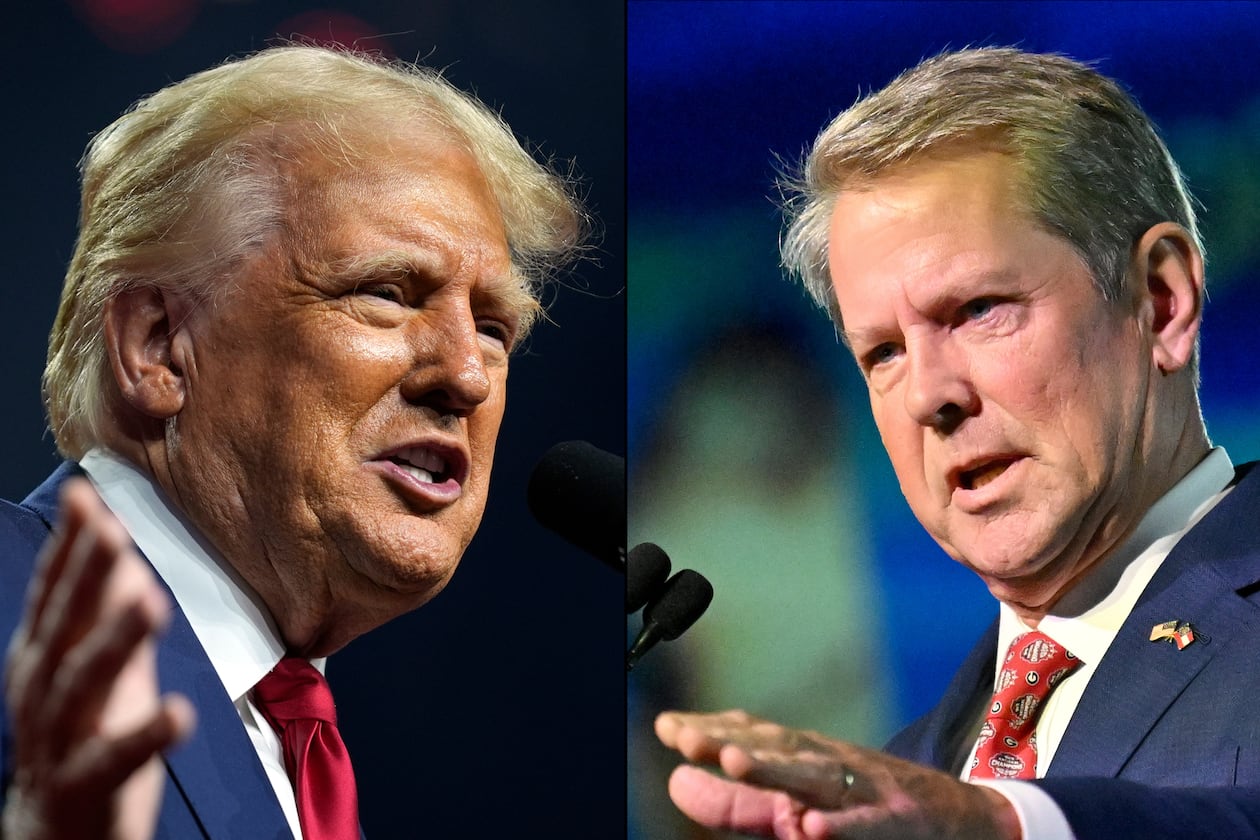
The Callais decision led President Donald Trump to demand Republican legislators call special sessions to gerrymander all over the South before the midterms. This could result in Black voters losing opportunities to elect candidates they had before the Voting Rights Act was passed.
All of Memphis has been in one congressional district for decades, giving voters in the largest majority Black city in the South an opportunity to elect their candidate to Congress. All of Nashville was in one congressional district until its 2022 gerrymander, sending a Democrat to Congress, the choice of Black voters.
The Georgia General Assembly returns for a special session June 17 with a mandate to redraw congressional districts for the 2028 elections, though not this year’s midterms.
Atlanta’s large population probably prevents it from being totally gerrymandered out of representation in the House, although the session called for may cause some loss of Democratic representation that Black Georgians prefer. But other cities in Southern states whose Black voters have been or are threatened to be gerrymandered out of representation in Congress include Austin, Texas; Charlotte and Raleigh, North Carolina; Birmingham, Alabama; Jackson, Mississippi; and New Orleans.
The decisions of the Supreme Court’s Republican majority caused this attempted reversal of America’s civil rights revolution. The adoption of these racially discriminatory gerrymanders will destroy trust in a nonpartisan court and demonstrate that the party of Lincoln has betrayed its founding principles.
Denty Cheatham of Nashville, Tennessee, is a lawyer with more than 60 years of experience and a partner with his wife in the law firm Cheatham & Palermo. A version of this guest opinion essay appeared in The Tennessean on June 4.
About the Author
Keep Reading

The Latest
Featured